
Rent control backers say they’re on track to go before voters next year
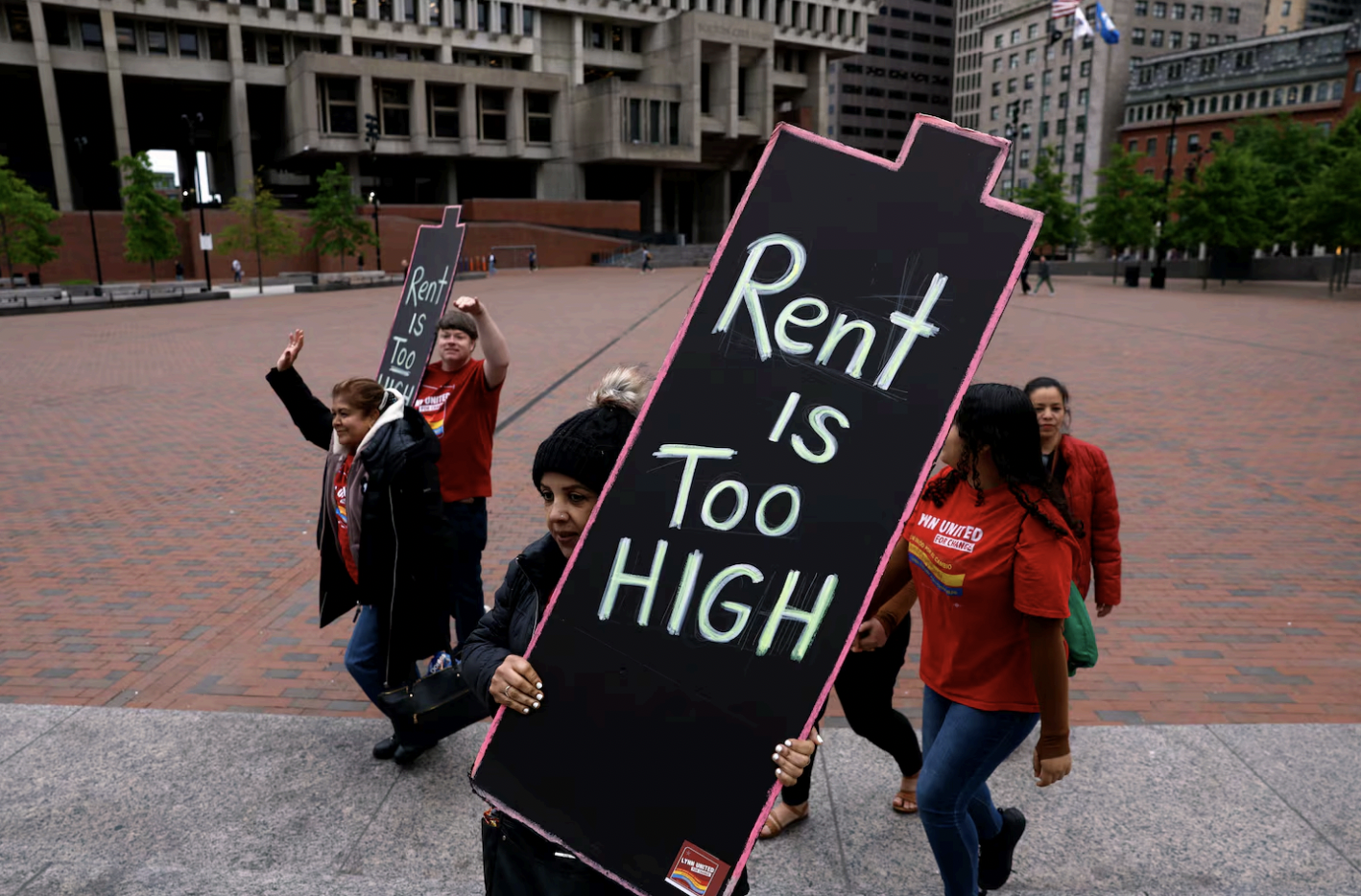
The organizers of a ballot initiative that would establish rent control statewide in Massachusetts said Tuesday that they have gathered enough signatures to take a major step toward putting the measure before voters in 2026.
The campaign — “Keep Massachusetts Home” — said it has collected more than 124,000 signatures over the last few months, well over the number required to be submitted to state elections officials next month. Ballot initiative campaigns must submit at least 74,574 signatures from registered voters by Dec. 3. Then the initiative will go to the Legislature, and if lawmakers don’t act on it by May, an additional 12,429 signatures are due by July 1, 2026, to officially put it on next November’s ballot.
Should the signatures be verified by state election officials, and the measure clear all legal hurdles, voters will be asked whether or not to establish a rent control policy that would cap annual rent increases at 5 percent for most apartment buildings.
“Over the past few months, thousands of renters and homeowners across the state stood outside grocery stores and shopping malls, spoke to neighbors at soccer games and school dropoffs, and organized their communities to sign for rent control — because we believe that everyone in Massachusetts should be able to afford a place to call home,” Rose Webster-Smith, director of the tenant group Springfield No One Leaves, said in a statement. “By coming together to win rent control on the ballot next year, we can keep Massachusetts home for all of us.”
The ballot question would pit tenant groups, labor unions, and other advocates against the state’s powerful real estate industry, which has already said it is willing to spend millions to defeat it.
“The risks of this ballot question for our economy cannot be overstated,” the real estate industry groups NAIOP Massachusetts, the Greater Boston Real Estate Board, and the Massachusetts Association of Realtors said in a statement Tuesday. “It is not an opt-in: this question creates the most restrictive rent control program in the entire United States and forces it on every city and town across the Commonwealth. It will unquestionably make our housing crisis worse and significantly reduce the supply of quality homes on the rental market.”
The proposal that advocates, led by the tenant coalition Homes For All Massachusetts, have put forward would tie allowable rent increases to the Consumer Price Index, with a maximum of 5 percent, except for buildings that have four units or fewer or are less than a decade old — carve-outs designed to protect small landlords and keep the production of new apartments steady. Only once in the last 30 years has annual inflation topped 5 percent, meaning that most years, the allowed rent hikes would be lower than that.
While support for rent control — particularly for “rent stabilization” policies that tie rent to inflation — has grown nationally, a 5 percent cap would be lower than nearly any other policy on the books right now, including recent measures in Oregon and Washington, and in Portland, Maine.
Some of rent control’s biggest backers in Massachusetts have yet to throw their support behind the ballot initiative. That includes Mayor Michelle Wu, who proposed a rent stabilization policy for Boston in 2023 that would have established a more flexible rent cap tied to inflation. Wu said on GBH’s Boston Public Radio Tuesday that Homes For All’s policy is “quite restrictive” and that she would have preferred the question to establish a local option for rent control, rather than a statewide policy.
As housing costs have risen, tenant groups have increasingly pushed Beacon Hill lawmakers to pass bills legalizing rent control, to no avail. In recent years, the idea of putting the question directly to voters gained momentum among tenant advocates, though supporters disagreed on when and in what form it should take.
The initiative has earned the support of several prominent labor groups, including the SEIU Massachusetts State Council and the Massachusetts Teachers Association, which helped pass other highly contested ballot questions, including the so-called millionaires tax in 2022. Some of those groups said they would support Homes For All’s signaturegathering efforts.
Real estate groups have warned the policy would effectively halt housing development in Massachusetts, hurt landlords’ bottom line, and lead to a decline in the upkeep of apartment buildings. They have also said it would do little to address the high cost of housing, because it would actively slow the state’s efforts to fill the housing supply gap that has driven up rents and home prices.
Several prominent real estate groups sent a letter to mayors across the state last month, warning of the “unintended consequences” of the proposal.
Advocates have acknowledged that their opponents will be willing to spend big to defeat the proposal. Their hope is that so many renters in this state have become fed up with the cost of housing that they would be willing to support a policy like rent control. Long a lightning rod issue, the policy was banned by Massachusetts voters in 1994, at a time when only Boston, Brookline, and Cambridge had rent control.
“We know that corporate real estate lobbyists will say anything to protect their ability to double rents overnight,” Noemi Ramos, executive director of the New England Community Project, said in a statement. “We’ve already had tens of thousands of conversations with voters across the state to get ahead of their misinformation, and talk about how rent stabilization will stabilize our communities, protect our essential workers, and keep rent costs reasonable and predictable so that renters can save and have a fair shot at the dream of owning a home.”