
Rent Control Supporters File Campaign Finance Report Showing Massive Grassroots Campaign
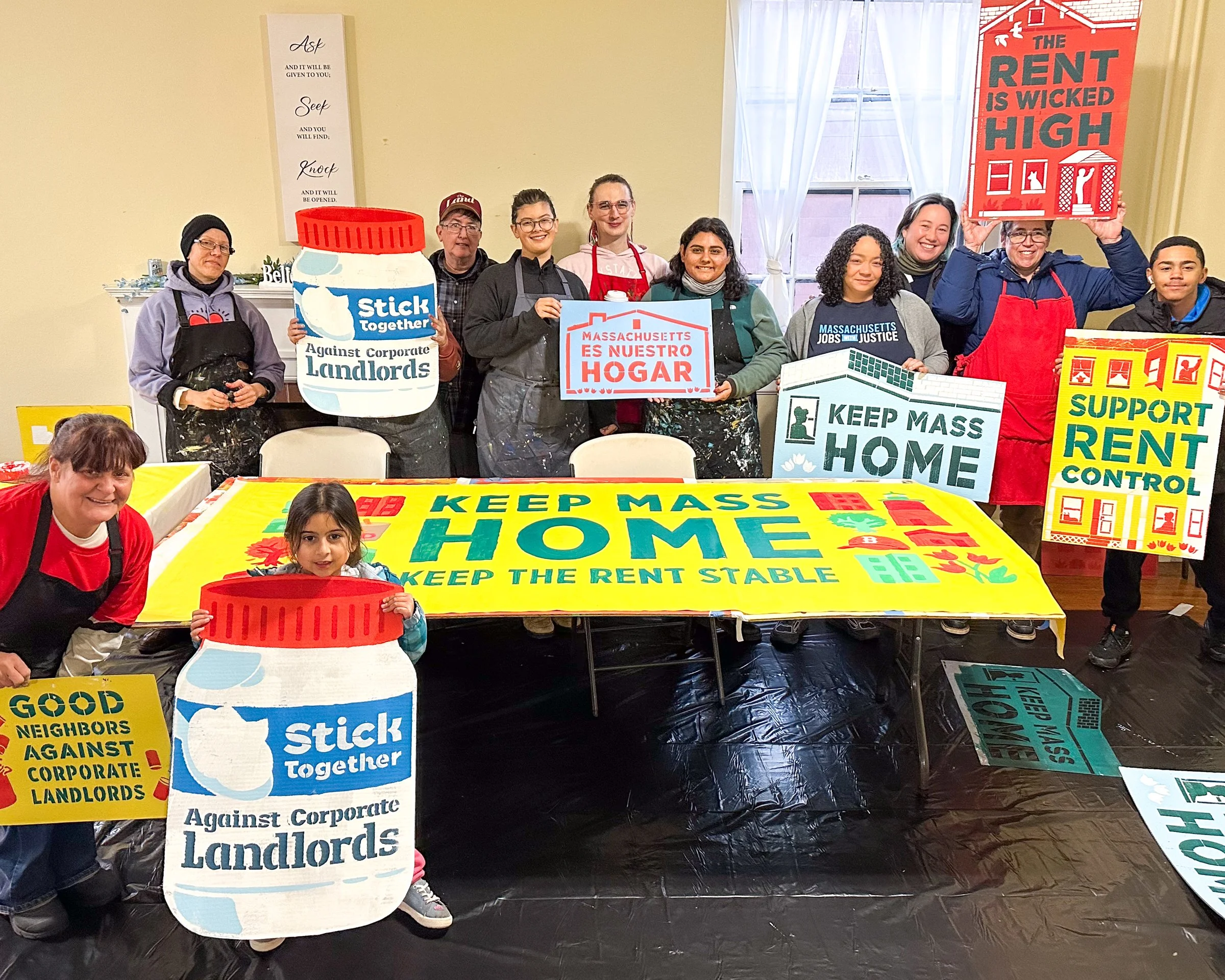
Supporters of the proposed ballot initiative that would limit annual rent increases to no more than 5% filed a campaign finance report today that showcases the enormous grassroots energy behind the push for rent control in Massachusetts.
Last year, supporters of the ‘Keep Massachusetts Home’ campaign collected more than 124,000 signatures from voters across the state to qualify the measure for the November 2026 statewide ballot, far more than the required 74,574. During a year when eleven ballot initiatives submitted enough signatures to qualify for the ballot, largely by writing checks for hundreds of thousands of dollars to hire paid professional signature gathering firms, this represented the state’s largest grassroots ballot signature gathering campaign in the state this election cycle.
The Keep Massachusetts Home campaign was the only successful signature gathering campaign that did not hire a paid professional signature gathering firm to collect the signatures needed to qualify for the ballot.
“Everyone benefits when Massachusetts residents have stable housing they can afford, but right now, there’s no limit to how much corporate real estate investors can drive up housing costs to increase their own profits. That’s why dozens of grassroots organizations across the state worked together throughout the fall to put a statewide rent stabilization policy on the ballot,” said Noemi “Mimi” Ramos, Executive Director of New England Community Project and chair of the Keep Massachusetts Home ballot committee. “We did this one signature at a time — not by writing big checks, but by building a big coalition. Hundreds of volunteers spent hours outside grocery stores and malls, talking to our neighbors about how rent control can keep Massachusetts home for all of us. This campaign finance report reflects that incredible grassroots energy, and it’s just the start of the massive statewide campaign we’re building to win immediate relief from predatory rent hikes for everyone in Massachusetts.”
Today, the Keep Massachusetts Home campaign reported receiving $57,721.88 in cash donations toward the ballot campaign in 2025, as well as $689,980.55 in in-kind donations of staff time, printing, food and transportation costs for volunteer signature gatherers, and other expenses. More than 30 organizations across the state reported in-kind support for the ballot campaign, reflecting the broad-based support for rent control from grassroots housing justice groups, labor unions, and community and faith-based organizations throughout the state.
“As we stood outside grocery stores and shopping centers collecting signatures, we had thousands of conversations with voters about rent control. Again and again, we heard that the people of Massachusetts want stable rents that working class families can afford,” said Isaac Simon Hodes, Executive Director of Lynn United for Change. “Across a really diverse range of cities and towns on the North Shore, people talked about their frustration with the housing crisis and the need for bold solutions. Both renters and homeowners understand that massive rent increases destabilize our communities, and that rent stabilization is needed urgently. Designed with input from residents and experts across the state, our modern rent stabilization policy will prevent excessive rent increases and protect tenants from big corporate investors, while allowing local landlords to earn a reasonable profit and providing a ten year exemption for the new construction that can help address housing shortages in the long term.”
“All across Western Mass, we're seeing people being forced out of their homes by rising rents. More and more, we're witnessing corporate real estate investors buying up homes and doubling the rent overnight,” said Rose Webster-Smith, Director of Springfield No One Leaves. “That's why hundreds of renters and homeowners from all four counties spent thousands of hours this fall gathering signatures to put rent control on the ballot. From our cities to our rural communities, we need modern rent stabilization to keep Western Mass home.”
The full list of organizations reporting in-kind support of the campaign: 1199 SEIU, Asian American Resource Workshop, Brockton Workers Alliance, Chinese Progressive Association, Coalition For Social Justice Education Fund, Community Action Agency of Somerville, Dudley Street Neighborhood Initiative, Episcopal City Mission, Essex County Community Organization, Fenway Forward, Health in Partnership, La Colaborativa, Lowell Alliance, Massachusetts Affordable Homeownership Alliance, Massachusetts Law Reform Institute, Massachusetts Public Health Alliance, Massachusetts Senior Action Council, Massachusetts Voter Table, Merrimack Valley Project, Neighbor To Neighbor Massachusetts Education Fund, New England Community Project, Pioneer Valley Project, Resist Inc (fiscal sponsor of Neighbors United for a Better East Boston and Reclaim Roxbury), Revere Youth in Action, Right To The City Alliance Inc (fiscal sponsor of Springfield No One Leaves), Somerville Community Corporation, The City School, Tides Advocacy (fiscal sponsor of Lynn United for Change), True Alliance Center, United Interfaith Action of Southeastern Massachusetts, Urban Edge Development Corporation, Urban Revival Inc (City Life/Vida Urbana), and Unitarian Universalist Mass Action.
“For years, Fenway Forward has seen firsthand how deeply our neighbors care about housing justice,” said Steve Farrell, Executive Director of Fenway Forward (formerly Fenway CDC). “The community leaders running signature-gathering efforts - many of whom live in affordable housing - have dedicated countless hours because they understand that stable rents strengthen the entire neighborhood. This effort is being driven by the residents themselves, highlighting the shared commitment to housing stability and greater equity."
“We've seen huge support for this effort from faith communities across the state, who recognize the need for rent control as a moral issue. As we collected signatures across the state, we heard from community members about how hard it is to afford to live in their neighborhoods,” said Tali Smookler, Congregational Organizing Director at Unitarian Universalist Mass Action. “We’ve heard stories of rent being increased by $600, or even $900 dollars a month because there's no limit on rent increases, and we’ve heard stories of people being displaced from their communities and homes, causing immense challenges for their lives. It's been inspiring to see faith groups come together across denominations, along with grassroots groups from across the state, to live out our values and support keeping MA residents home.”
“After speaking with more than 1,200 residents over the last 16 months, it has shown us that housing instability affects families in both affordable and market-rate housing,” said Urban Edge Housing Corporation CEO Emilio Dorcely. “Residents know this issue cuts to the heart of their neighborhoods, and they are determined to do everything they can to keep their neighbors from being displaced.”
Hundreds of volunteers collected signatures for the ballot initiative from voters in 332 of the state’s 351 cities and towns — everywhere from large cities like Springfield and Lynn to smaller communities like Hawley (population 353) and Alford (population 486).
If legislators do not act on the measure by this spring, advocates must then collect 12,429 more signatures in May and June to place it on the November 2026 statewide ballot.
The ballot initiative, An Initiative Petition to Protect Tenants by Limiting Rent Increases, would limit annual rent increases in Massachusetts to the cost of living, with a cap at 5%. For an apartment that costs $2,000 per month, that means an annual increase in monthly rent of no more than $100/month.
The limit on rent increases would continue to apply when new renters move in, meaning rent could not be drastically increased between tenants. The ballot initiative would support small landlords, not big corporations, by exempting owner-occupied buildings with four or fewer units. And it would encourage housing production and economic growth by applying rent limits to new construction only after a building’s first 10 years.