
New Report: Setting the Record Straight on Rent Control in Massachusetts
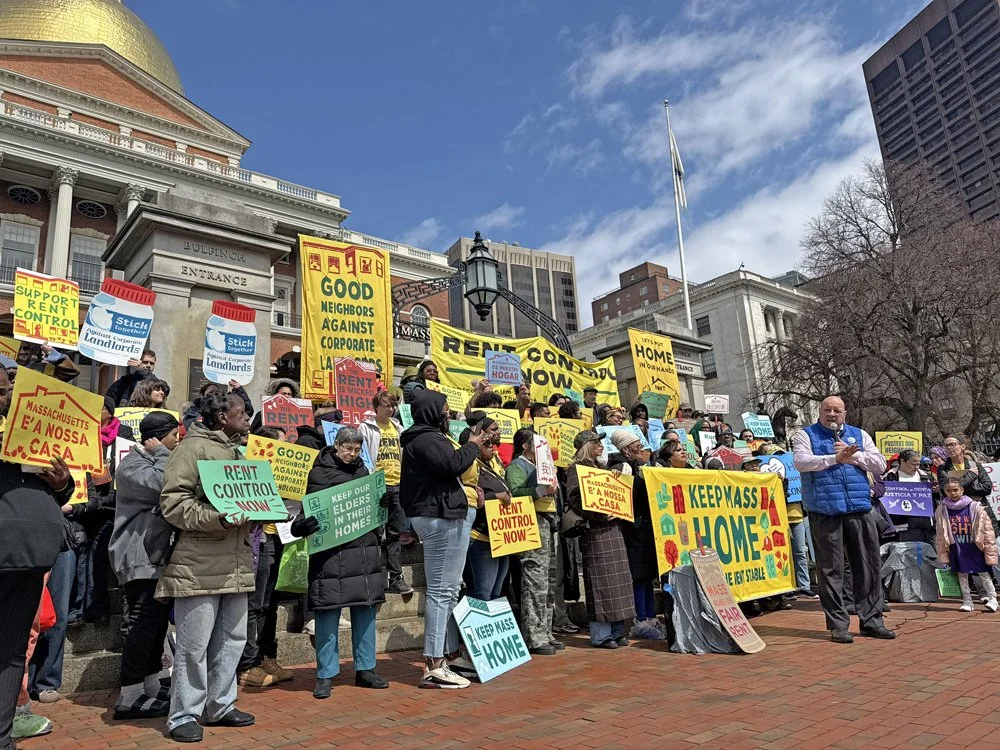
Massachusetts is in the middle of a housing affordability crisis—one that is neither an accident nor inevitable. For well over a decade, rents have risen faster than inflation and wages. This is pushing households to the brink, and forcing many residents out of the communities they call home. Today, too many residents are paying more than they can afford to simply stay housed. At the same time, displacement, homelessness, and housing instability continue to rise.
Our out-of-control housing market needs regulation, and renters need protection. This emergency is often treated as a problem the market will fix—but simply increasing housing supply will not solve it. In reality, today’s crisis is a result of policy choices that have allowed rents to increase without meaningful limits, even as the consequences ripple through our communities impacting schools, healthcare, and the local economy.
Rent stabilization is a sensible and essential tool for addressing our housing emergency and preventing homelessness by improving stability and affordability for a huge swathe of tenants. Evidence shows rent stabilization keeps rents affordable, empowers tenants, and prevents displacement while still ensuring a fair return for landlords.
Rent stabilization is also unrivaled in speed, scale, and cost-efficiency. As part of a broader set of housing policies, it is a proven and effective tool for maintaining affordability in both new and already existing homes, while helping to create more stable and thriving communities. Nearly 200 jurisdictions in the U.S. have rent stabilization policies, benefiting millions of residents without hurting housing production rates.
Real Estate Lobby’s Recent Report is Misleading
Communities have organized across the country to win stronger rent control, and in response the real estate industry is attacking these gains. Each year, corporate landlords and the real estate lobby pour tens of millions of dollars into demonizing rent control, circulating misguided claims that are not founded in comprehensive evidence, or in centering how rent stabilization positively impacts people’s lives.
A recent report by the Greater Boston Real Estate Board (GBREB) greatly misconstrues rent stabilization’s relation to property values and tax revenues. It is biased and misleading.
This real estate industry report is being bandied about as a “Tufts” study. Yet the Greater Boston Real Estate Board is aggressively promoting it to lobby against rent stabilization. The real estate industry vowed to pour $30 million this year into fighting a Massachusetts-wide ballot measure for rent stabilization—releasing this report on the eve of a historic hearing on the measure at the state legislature.
The GBREB report’s methods, on closer inspection, are weak. Like so many real estate industry “projections” released to the media, it is a hit piece that uses scare tactics. It attempts to pit tenants and homeowners against each other, when in actuality we all share a common interest in keeping our communities stable.